AC vs DC EV charging: what’s the difference and why it matters
As EV adoption continues to accelerate, one of the most common questions drivers ask is: what’s the difference between AC and DC charging – and which one is right for me?
Whether you’re charging at home, at work, or on the go, understanding the AC vs DC EV charging debate is key to getting the most out of your electric vehicle.
In this guide, we’ll explain the technical differences, real-life charging speeds, and the ideal use case for each type.

What is AC charging?
AC stands for alternating current, which is the type of electricity that comes out of your standard wall outlet at home. When you plug your EV into a regular charger (also known as Level 1 or Level 2), you’re using AC charging.
But there’s a twist: EV batteries don’t store AC power. They only accept DC (direct current). To solve this issue, your vehicle has a built-in onboard inverter that converts AC power into DC before it gets stored in your battery.
How fast is AC charging?

AC charging is typically slower, but perfectly suited for:
- At home – overnight, on weekends, or during home office days
- At work – while you’re parked for the day
- At public locations – such as hotels, restaurants or shopping centres
Charging speeds vary, but here’s a ballpark:
- 3.7 kW (1-phase): ~20 km/hour
- 7.4 kW (1-phase): ~40 km/hour
- 11 kW (3-phase): ~60 km/hour
- 22 kW (3-phase): up to 120 km/hour
What is DC charging?
DC stands for direct current, and this is where things get faster.
DC charging (also known as fast or rapid charging) skips the onboard inverter entirely. Instead, the conversion from AC to DC happens in the charging station itself. That way, your EV directly receives DC power directly, enabling much faster charging speeds.
This is why DC fast chargers are often large, powerful, and found in commercial settings such as: Highway rest stops
- Highway rest stops
- EV charging hubs
- Retail locations with high turnover
Tip: AC charging is ideal for daily top-ups and long dwell times.
How fast is DC charging?
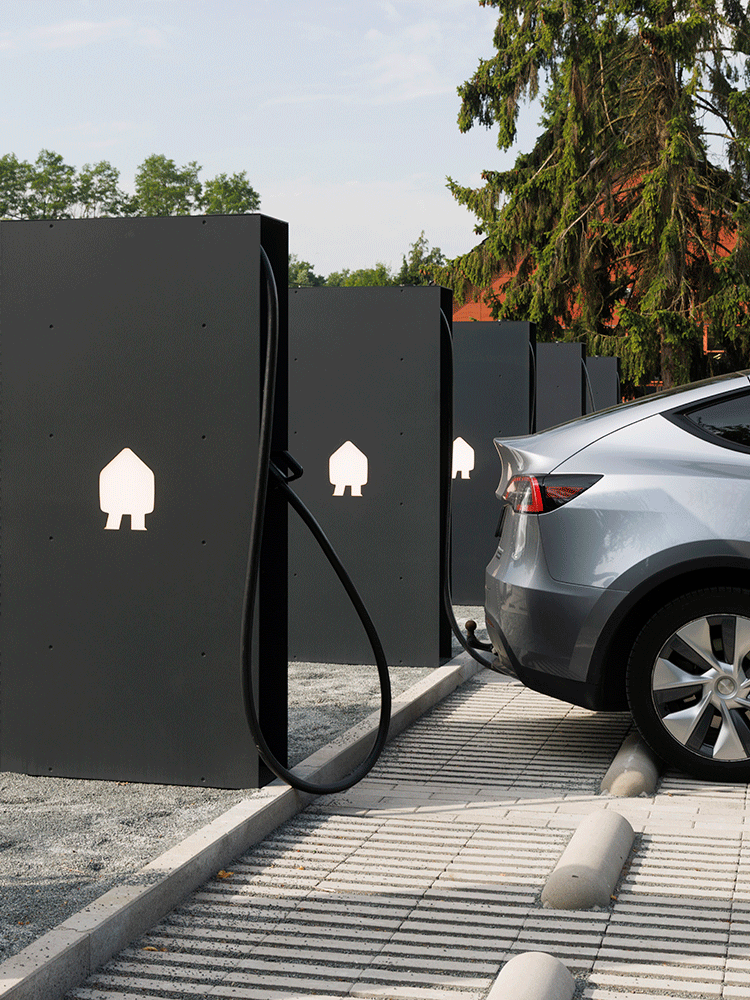
DC fast chargers can power up your EV from 20% to 80% in as little as 15 to 30 minutes.
Typical speeds:
- 50 kW: ~150 km in 30 minutes
- 150 kW: ~300 km in 30 minutes
- 350 kW (ultra-fast): up to 400 km in 15 minutes (if your EV supports it)
But speed isn’t linear. As your battery fills up, charging slows down to protect battery health. Think of it like pouring water into a glass – fast at first, slower near the top.
AC vs DC EV charging: key differences
| AC Charging | DC charging | |
| Current type | Alternating current (AC) | Direct Current (DC) |
| Conversion location | Inside the vehicle (onboard inverter) | Inside the charging station (external converter) |
| Charging speed | Slow (3.7–22 kW) | Fast to ultra-fast (50 kW–1MW) |
| Ideal for | Home, work, overnight | Long-distance travel, quick stops |
| Cost of infrastructure | Low to medium | High |
| Cable size | Standard | Heavy-duty, often tethered |
| Connector type | Type 1 or Type 2 | CCS1, CCS2, CHAdeMO, MCS |

When should you use AC charging?
Use AC charging when:
- You have several hours to charge your vehicle
- You want to maximize solar energy usage
- You care about battery health and long-term performance
Tip: Smart charging stations help you optimize AC charging to charge at the cheapest rate.
When should you use DC fast charging?
Use DC charging when:
- You’re on the road and need a quick top-up
- You’re managing a commercial EV fleet
- Time is more important than cost
Tip: Frequent fast charging isn’t harmful with modern battery management systems, but it’s still recommended to limit it to when speed is essential.
AC and DC charging in practice: why you need both
Still wondering which charging type is better?
Here’s the truth: It’s not about choosing between AC or DC, it’s about knowing when to use each.
- AC at home/work: low-cost, smart, solar-powered
- DC in public: fast, convenient, and ideal for trips
Most EV drivers use a combination of AC and DC charging. Together, they cover all your driving needs, whether you’re charging overnight or en route to your next destination.
© Smappee. All rights reserved.